todo o material postado no blog pode ser encontrado na internet
Showing posts with label Design. Show all posts

Coca-Cola’s Holiday Cans Contain Hidden Designs, And You’ll Smile When You Notice Them

from:www.boredpanda.com

If you’ve got an impeccable eye for detail, you might have noticed by now that Coca-Cola’s polar bear-adorned holiday cans hide a few secret – and refreshing – symbols, and the ways they were disguised are supremely clever.

The man behind the campaign is none other than Israeli graphic designer and artist Noma Bar.
He’s an expert at using negative space as a creative canvas, and his minimal yet masterful works often contain multiple images woven together. That’s why it comes as no surprise that when Bar
was bringing the polar bears now featured on Coca-Cola’s festive cans for a second consecutive
year to life, he infused their wavy silhouettes with imagery that only the sharpest eye could pick up.

“The illustrations feel fresh and playful and capture special holiday moments of family togetherness,” Bar told Design Taxi about the limited-edition soda cans, which have been released in lush shades of red, green, silver and black.

Have a look for yourself below, and put your old ‘I-Spy’ skills to the test.

These festive Coca-Cola cans have fun hidden images woven into their sleek designs


The Nardi 750 Bisiluro Was The Strangest Car To Race Le Mans

from: www.roadandtrack.com

There have been Le Mans racers, and there have been ambitious, potentially zany Le Mans racers, fantastical bouts of engineering and bizarre pseudo-innovation that its builders intended would lead
to something greater. Why else would they showcase their cars at the greatest endurance race in the world? Probably because it was there. (Jalopnik has a great rundown of the truly weird that ran down Mulsanne, including the car you see above.)

But perhaps the weirdest race car to ever enter the 24 Hours of Le Mans—the weirdest race car ever, one of the weirdest cars ever—may just be a missile-shaped, twin-boom race car with an oval steering wheel and a strange, brilliant, fantastical combination of catamaran, airplane, and motorcycle influences. It's a 1950s belly lake dragster, doubled. Born from jets? Baby, this thing is born from torpedo tubes.


Nardi, known today for wooden steering wheels and shift knobs, began life as a race car builder. Enrico Nardi was an accomplished mechanic and driver with Lancia, and he began building bizarre, Fiat-based sports cars powered by BMW motorcycle engines. There was the Nardi-Monaco Chichibio, named after co-creator Augusto Monaco's dog; a front-drive, V2-powered spindly little thing that could reach 80 kilometers per hour. Look at the 750 Nardi-Danese: exposed cylinder heads, one single headlight. Or the full-bodied Barchetta version, named the "Boby Sport" with a goofy grin for a grille and a bulging proboscis that makes various mid-2000s Mercedes-Benz sports cars look subtle. Laugh you will, and you just might, but these cars dominated local hillclimbs, whooping MG Midgets the whole way up.

Unsurprisingly, Nardi's most ambitious project carried on a proud tradition of the Strange.


Asymmetry is a highly underrated quality in design. It messes with our brains. Humans seek out symmetrical shapes in nearly everything we see: art and architecture, leaves on the ground, even our own faces (which are not at all symmetrical). And certainly in cars, where any bold dash of asymmetry is relegated mostly to hood scoops and ephemera: the Ford SVO, the Mazda RX-7, the hood bulge on a Mitsubishi Eclipse, the rear door on a Nissan Cube, the driver's head fin on a Jaguar D-Type.


Not for Enrico and his associates. Here was Nardi's ultimate project, the Nardi-Danese 750 Bisiluro. What's in a name, asked another famous Italian, and while this car has had a few, its formal name was Damolnar, combining the last names of chief engineers Mario Dalmonte, Carlo Mollino and Enrico Nardi. And in Italian, "bisiluro" means, rather appropriately, "twin torpedo."


CRAZY NEW WORKOUT MACHINES AND FITNESS EQUIPMENT THAT YOU'VE NEVER HEARD OF

from DailyMix


  • Vessyl

This ordinary-looking cup actually features smart technology that analyzes pretty much any liquid you put inside it. It can measure caffeine levels, calories, and sugar, to name but a few. A great invention for those who want to cut down on certain ingredients. The downside is that this has been in development since 2014, and is just starting to be made available to the public now. It should cost around $200.


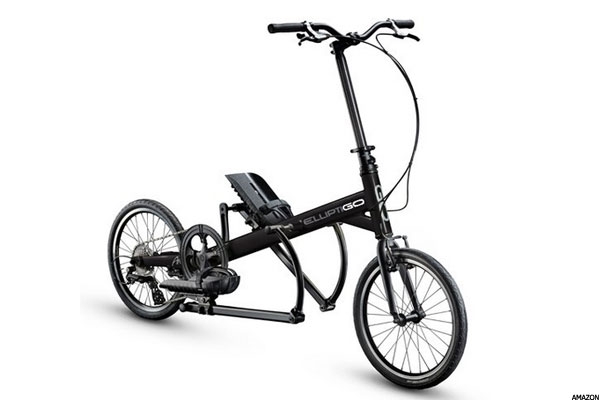
  • EliptiGO Arc


We all know that elliptical machines and bike trainers are a huge thing with gym junkies. But have you ever seen one that you can actually ride around? That's right, this thing actually MOVES. Just be prepared to work extra hard to actually get anywhere.


  • Thin Ice
This is the ultimate for people who want to burn calories without actually doing any work. It's a piece of "smart clothing" that will help you burn up to 1,000 additional calories a day. It's controlled through a mobile app, and it cools the body in key areas which stimulates the body to burn away fat. It costs about $99.


  • Marpo Kinetics VLT Functional Rope Trainer

A big new craze right now with fitness machines involves rope machines. But this machine is totally new and unique. It's built to simulate what it's like to climb and pull yourself up a rope. It's small and compact, meaning you can fit it in your home, and it features a wide range of different difficulties.


  • Naked 3D Fitness Tracker

You know in those sci-fi movies where they have full-body scanners that can tell you everything that's wrong with you? They invented something pretty similar. And now you can have it in your home. This device compiles Intel RealSense 3D data from your body, and can show you every part of your body in intense detail. If you're trying to lose weight or gain muscle in a certain area of your body, you can use this to get a really close look. You can even create a time lapse video of your body's transformation! But this thing isn't available yet, and when it does it will cost around $1000.


  • CityLight Street Lamp

This is such a cool idea. A company called INDEX invented this amazing streetlight that can also be used as a workout machine. It's designed to be free to use for the public. And the best part? The people working out actually POWER the light. That's right, the mechanical energy harvested from outdoor fitness freaks makes the light shine.

Atomic Age design


The Atomic Age, also known as the Atomic Era, is the period of history following the detonation of the first nuclear ("atomic") bomb, Trinity, on July 16, 1945, during World War II. Although nuclear chain reactions had been hypothesized in 1933 and the first artificial self-sustaining nuclear chain reaction (Chicago Pile-1) had taken place in December 1942, the Trinity test and the ensuing bombings of Hiroshima and Nagasaki that ended World War II represented the first large-scale use of nuclear technology and ushered in profound changes in sociopolitical thinking and the course of technology development.
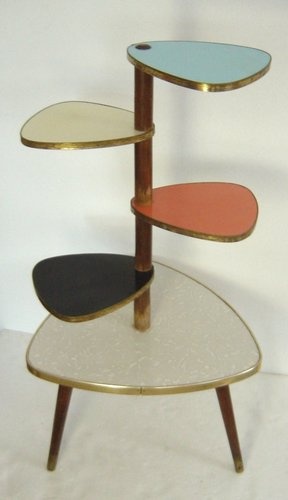
In design refers to the period roughly corresponding to 1940–1960, when concerns about nuclear war dominated Western society during the Cold War. Architecture, industrial design, commercial design (including advertising), interior design, and fine arts were all influenced by the themes of atomic science, as well as the Space Age, which coincided with that period. Atomic Age design became popular and instantly recognizable, with a use of atomic motifs and space age symbols. Retrofuturism is a current resurgence of interest in Atomic Age design.
  • Vital forms

"Vital forms", or abstract organic forms, were identified as a core motif in the 2001 exhibition of Atomic Age design at the Brooklyn Museum of Art, titled "Vital forms: American art and design in the atomic age, 1940–1960". Atomic power was a paradox during the era. It held great promise of technological solutions for the problems facing an increasingly complex world; at the same time, people were fearful of a nuclear armageddon, after the use of the atomic bomb at the end of World War II. People were ever-aware of the potential good, and lurking menace, in technology. Science became more visible in the mainstream culture through Atomic Age design.

Atomic particles themselves were reproduced in visual design, in areas ranging from architecture to barkcloth patterns. The geometric atomic patterns that were produced in textiles, industrial materials, melamine counter tops, dishware and wallpaper, and many other items, are emblematic of Atomic Age design. The Space Age interests of the public also began showing up in Atomic Age designs, with star and galaxy motifs appearing with the atomic graphics

Vintage Atomic Mid Century Metal Teacher Secretary Tanker Desk


1950's Atomic Age CHILD'S VINYL modernist ROCKER doll rocking chair


Free-form organic shapes also appear as a recurring theme in Atomic Age design. British designers at the Council of Industrial Design (CoID) produced fabrics in the early 1950s that showed "skeletal plant forms, drawn in a delicate, spidery graphic form", reflecting x-ray technology that was becoming more widespread and familiar in pop culture. These botanic designs influenced later Atomic Age patterns that included repeating organic shapes similar to cells and organisms viewed through a microscope.


There are similarities between many Atomic Age designs and the mid-century modern trend of the same time. Elements of Atomic Age and Space Age design were dominant in the Googie design movement in commercial buildings in the United States. Some streamlined industrial designs also echoed the influence of futurism that had been seen much earlier in Art Deco design.


Space Age design

Whereas Atomic Age motifs and structures leaned towards design fields such as architecture and industrial design, Space Age design spread into a broader range of consumer products, including clothing fashion, and even animation styles, as with the popular television show The Jetsons. Beginning with the dawn of the Space Age (commonly attributed to the launch of Sputnik in October, 1957, Space Age design captured the optimism and faith in technology that was felt by much of society during the 1950s and 1960s. Space Age design also had a more vernacular character, appearing in accessible forms that quickly became familiar to mainstream consumers. 
Space Age design became more closely associated with kitsch and with Googie architecture for popular commercial buildings such as diners, bowling alleys, and shops. "Space Age design is closely tied to the pop movement [...] the fusion of popular culture, art, design, and fashion".

  • Fashion
Two of the most well-known fashion designers to use Space Age themes in their designs were Pierre Cardin and Paco Rabanne. Pierre Cardin established the futuristic trend of using synthetic and industrial materials in fashion, with "forward thinking" innovations in his early 1960s work. Cardin "popularized the use of everyday materials for fashion items, like vinyl and metal rings for dresses, carpentry nails for brooches, and common decorative effects such as geometric cut-outs, appliqués, large pockets, helmets and oversized buttons". In 1964, Cardin launched his "space age" line, and André Courrèges showed his "Moon Girl" collection, introducing the white go-go boot style and other icons of the 1960s. The Japanese designer, Issey Miyake from Hiroshima, worked in Paris and New York from 1964 to 1970, and used many atomic age forms, and technologically produced materials in his work. In 1970 he moved to Tokyo to continue these innovations. Miyake cites his first encounter with design as two bridges his home-town, Hiroshima at the hypocenter of the atomic bombing of the city in WWII.


  • Vernacular architecture
The dingbat apartment house, ubiquitous in the Los Angeles, California area were built between 1945 through the 1960s, fused a purist style with googie influence. The architect, Francis Ventre, coined the term "dingbat" for these quickly built stucco and frame simple structures. These structures often had a single exterior ornament in the shape of a starburst, boomerang, pattern of rectangle


  • Architecture
The Chemosphere house, designed by John Lautner in 1960, has become an icon of the atomic age home. The octagonal shaped house is cantilevered on a steep slope in the Hollywood Hills, California. At the time, Encyclopædia Britannica cited it as the "most modern home built in the world."


Nimuno Loops, Flexible and Posable Tape That Turns Anything Into a LEGO Compatible Surface

Nimuno Loops can turn anything into a LEGO compatible surface using flexible and posable tape that can be shaped and reapplied. The tape can also be cut to create different surface patterns.


Imagine being able to build around corners, on curved surfaces, or even onto the sides of that sailing ship you’ve just spent hours building. You forgot to engineer a point of attachment for that sweet dinosaur-smashing cannon? No problem. Snip a length of Nimuno Loops, stick it on the hull, mount your cannon and be on yarr way.

The company has launched an Indiegogo campaign to bring the tape to market and they’re offering rolls of tape as rewards to backers with stretch goals including new colors.


The Happy Half Wine Glass, An Amusing Response to Someone Who Asks for a Half Glass of Wine

The Happy Half by The Fowndry is a stemmed wine glass that has been literally split perfectly in half (except for the base – for balance) and is the perfect way to amusingly respond to any guest who asks for just a half glass of wine.
The perfect gift for the wine snob or pessimist in your life – is it half full? Half empty? How about half flipping missing? With a (thankfully) completely intact base, this quirky delight will nestle comfortably in the cupboard or on the table with the rest of your glasses. So the next time someone suggests a cheeky half, you’ve got just the thing…


Jewelry by Yugen Tribe on Etsy

Traduzir para ChinêsTraduzir para Espanholtraduzir para françêstraduzir para inglêstraduzir para alemãotraduzir para japonêsTraduzir para Russo


MikeLiveira's Space on Tumblr